HOME

PARASTIN


WHY
SCHOOL PROJECT
TYPE
VIDEO GAME - BOSS RUSH
ROLE
GAME DESIGNER - GAME PROGRAMMER - PROJECT MANAGER
At the heart of vast arenas, face the fiercest beasts and rise to the top to change the rules! Defend yourself by blocking or dodging their attacks, and wear down your opponent by parrying their most powerful blows. Then, unleash maximum damage during an intense taiko-style phase!
But be careful—the audience will be the sole judge of your actions…!
The game is inspired by Nier Automata, Stellar Blade, Furi, Sekiro and Taiko.
MY ROLE IN THIS PROJECT
- Setting up the first game design concept
- R&D and implementation of the Game Ability System using C++ and Blueprints
- Developments of gameplay abilities (such as dash, taiko, block, parry and movement), tags, and gameplay effects for the main character
- Development of modular tools for GAS in C++
- Integrating animations montage directly into gameplay abilities
- Approval of the Artistic Direction
- Management and coordination among game designers, game artists, and technical artists
- Conducting Playtests
Game Ability System
Starting with a broader scope and a more RPG-oriented foundation, I chose to use the Game Ability System to manage all attack events, effects, and cues.
The setup is entirely built using the plugin provided by Unreal and integrated via C++ by creating tools that can be used in Blueprints.
The player, the boss, and other instances are built on a common parent that manages the game ability system component.
Thanks to its optimized operation, the GAS was also chosen to maximize game optimization in a production process that can generate a significant amount of technical debt.
Game Ability System
C++ tools were created to assist other game designers on the project. Abilities and effects are integrated directly into the player's Blueprints, C++ functions was created in the player's & boss parent class so it can be used in Blueprints to modify all of they attributes (health, parry bar, fatigue, tag, etc.) to provide as much assistance as possible to game designers who do not work with C++.
Player Ability
For my part, I worked on all of the player's attacks: Dash, Parry, Block, and Taiko.
Movement is handled by Unreal's third-person camera.
Since the project went through many iterations, each of the character’s abilities changed significantly during development:
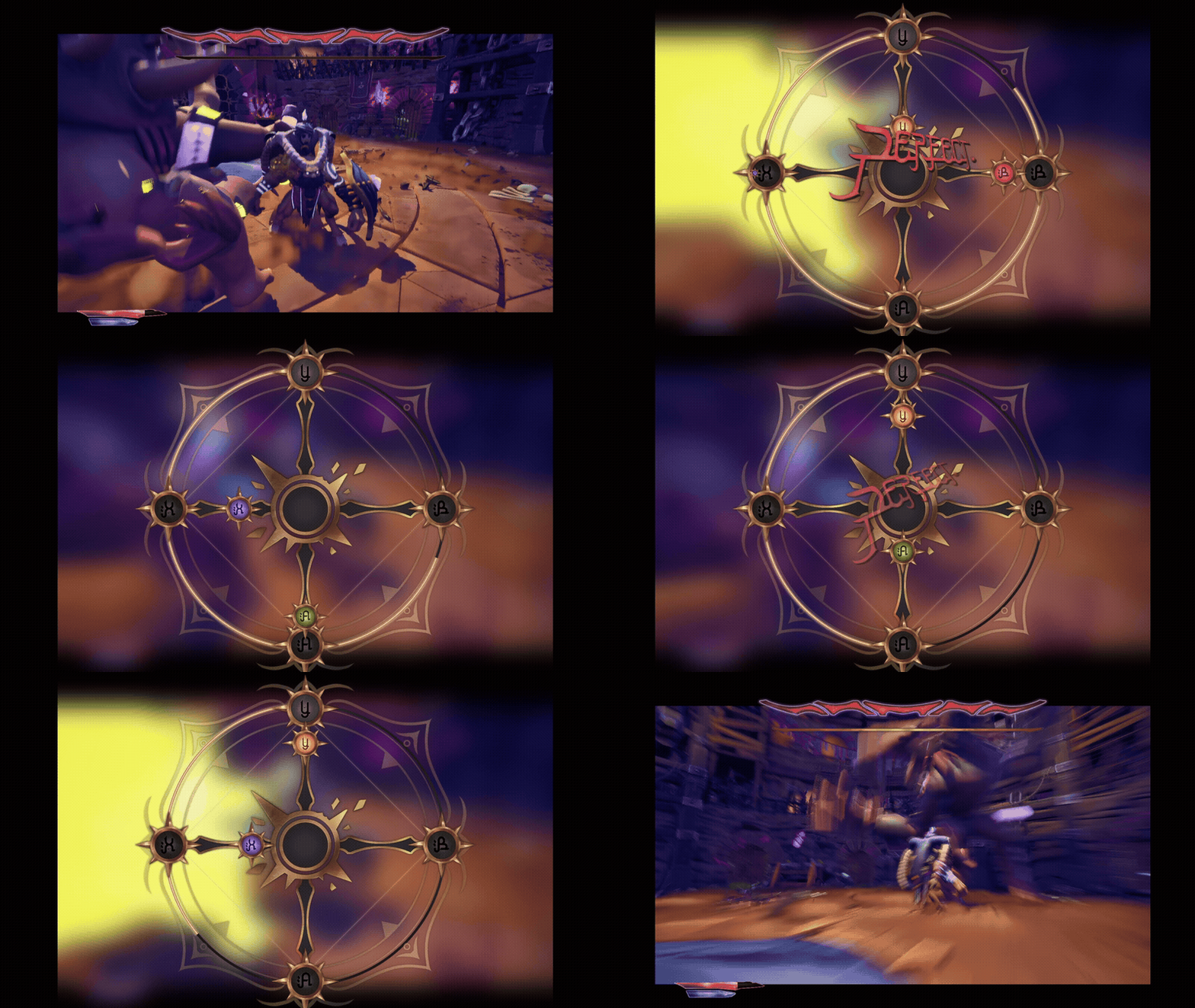
The Dash was initially designed to generate mana or grant invincibility, the Parry started as a QTE before evolving into a frame-based parry system similar to Sekiro, and the Taiko began as a touch-based smash like in Asura’s Wrath before shifting toward a style similar to Step Mania.
Taiko ability is made with the GAS and Unreal UMG.
Death is hardcoded in CPP to check if the boss/player have no health to activate an ability created in blueprints.
Player Ability
For the player's parries, it was decided to actively use animation notifications to send status updates to the player and the boss and determine at which frame the player is parrying (player state), can parry (boss state), and which buttons they need to use (attack boss state) trought data tables and tags.
Boss Ability
For this part, I translated the boss attacks created by others game designers so they could be used by the GAS.
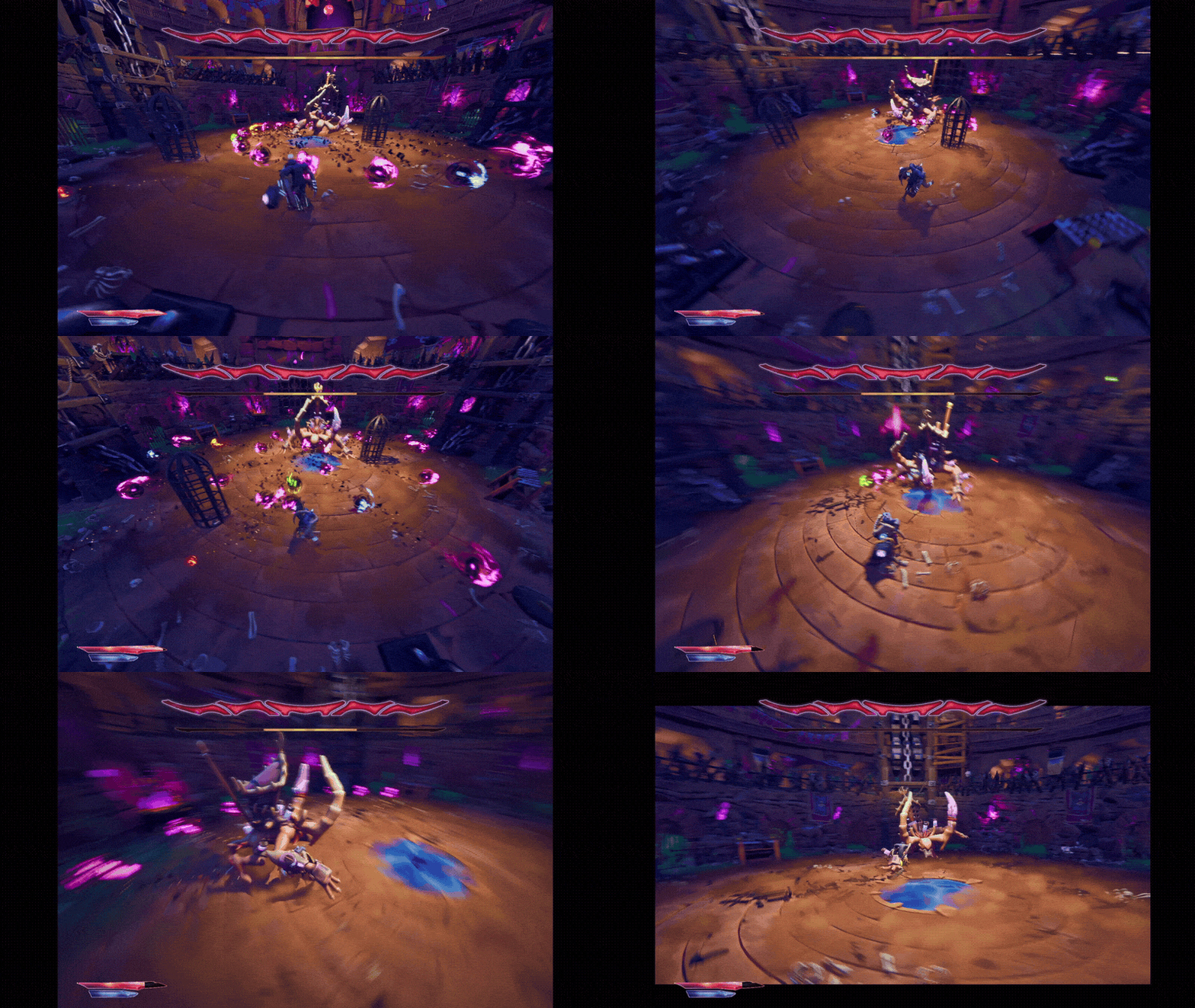
The boss’s attack values (damage to health, damage to the parry bar, key to use for parrying, animation montage to send) are randomly determined by a data table, and the parry frame (if the attack is parryable) is determined by a notify in the animation montage, which activates the attack’s hitbox and assigns a tag to the boss.
Data Tables was made to help Game Designers balance the game easely directly in the game engine.
Every boss attack was tested in a blank scene to time the parry frame and the feedbaack.
Level Design
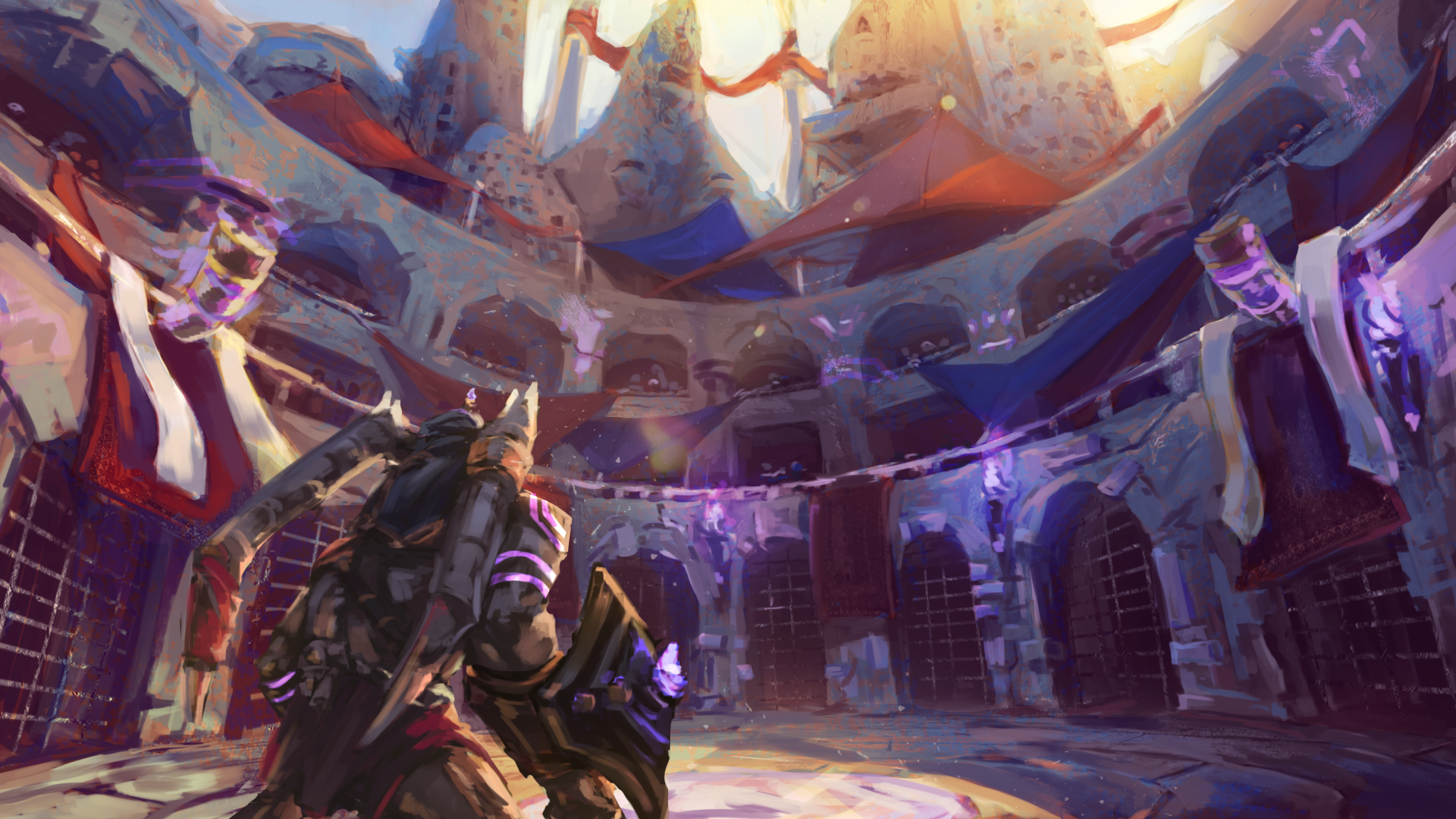
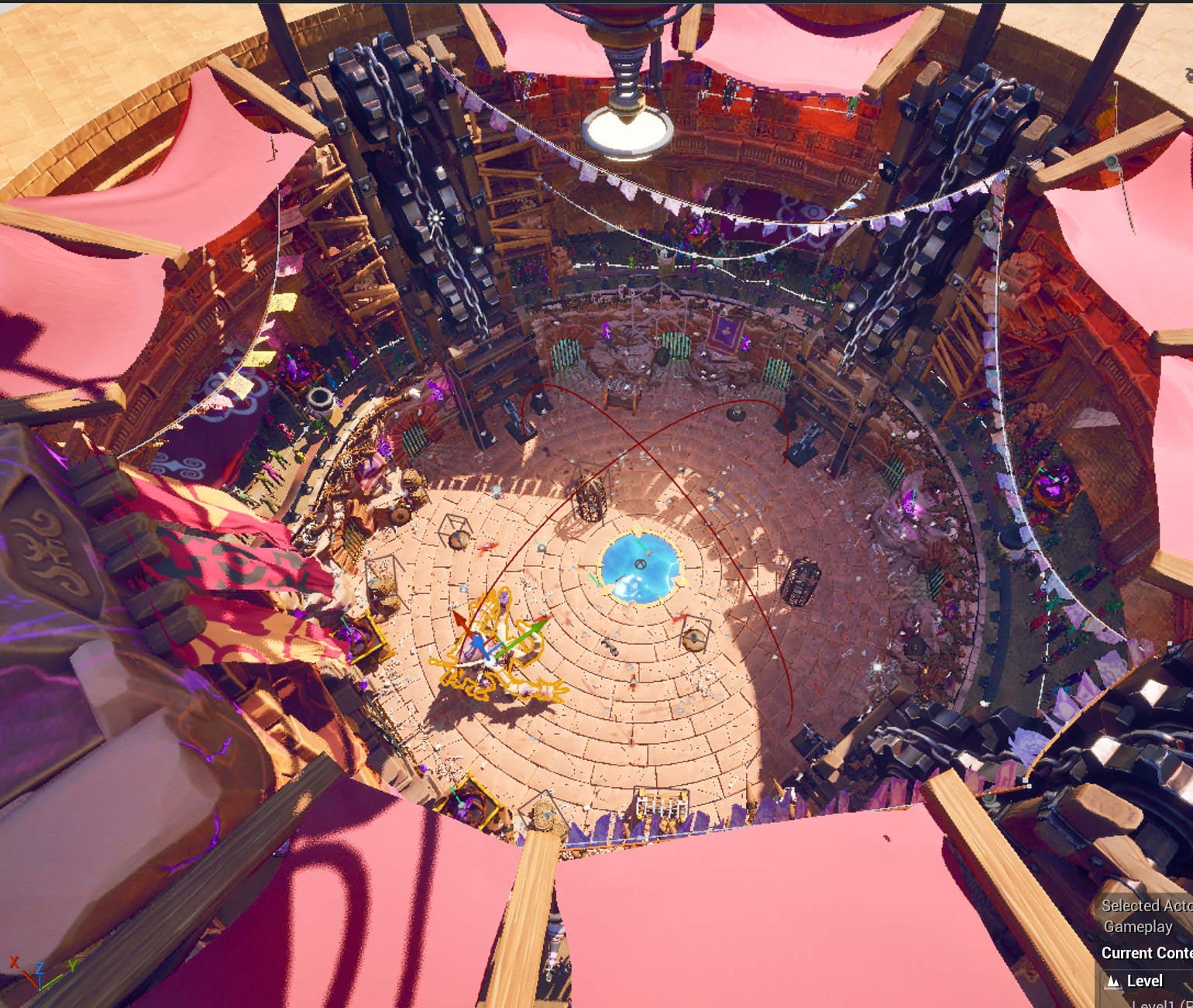
Since the game takes place in a circular arena, the level design didn't require a precise blockout, aside from several tests of arena size to determine the ideal feel.
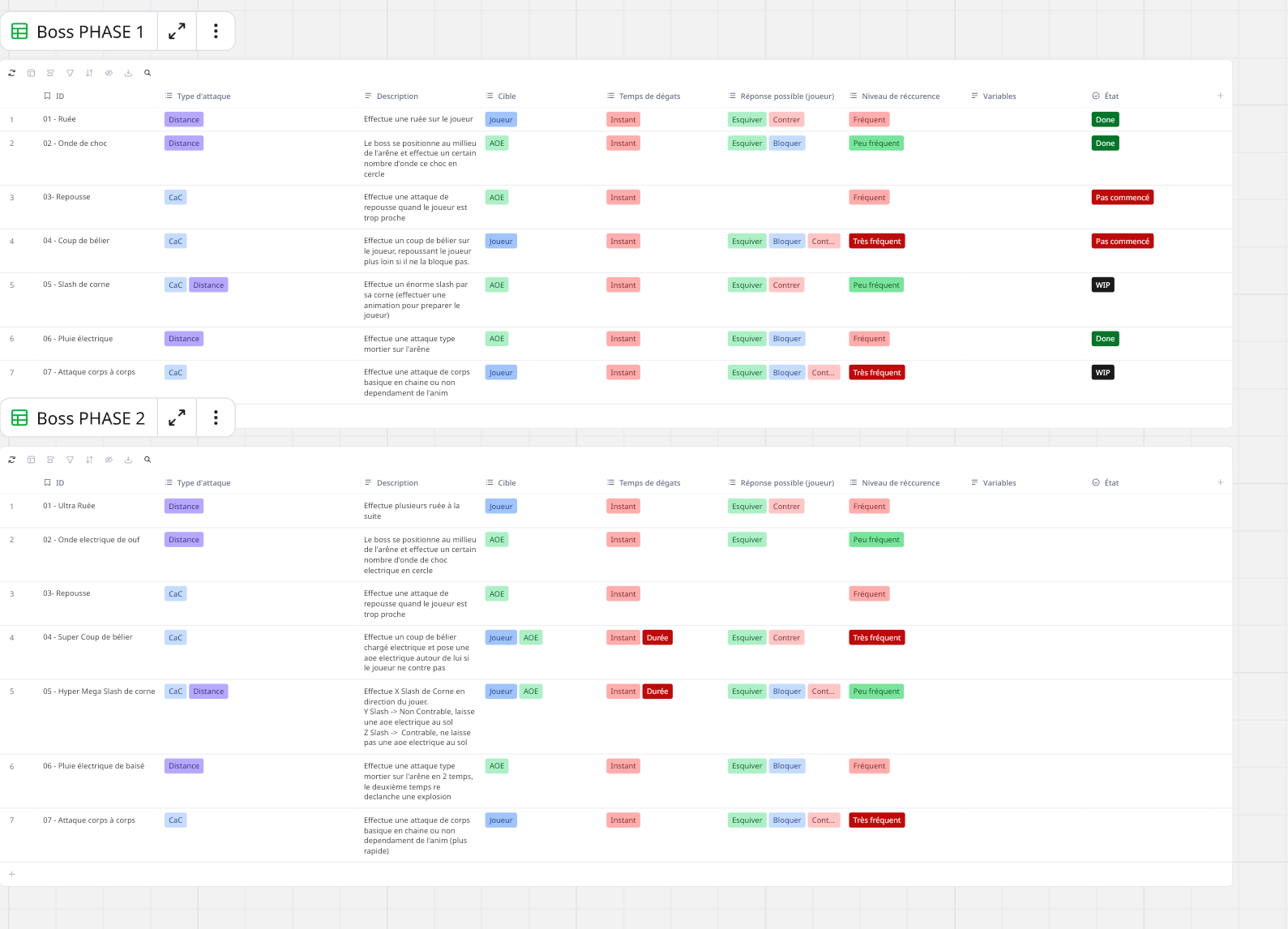
For the boss's RLD, most of the work involved creating documentation to provide as much guidance as possible to the GA and TA on what to do.
UI/UX Design
For this project, most of the UX/UI design was handled by the game’s artists. I contributed to the integration and development of the UMG for the player and boss vitals, all the menus and the taiko.
The UMG assets also include animations created entirely in Unreal Engine.
Cinematic
One of the key goals for the project was to implement cutscenes to reduce the scope without eliminating the work of the game artists.
I contributed to the cutscenes for the menus as well as those for the boss Phase 2 using the sequencer and sublevels.
All the sounds for the cutscenes were sourced from royalty-free platforms and mixed in Reaper.
QA Testing
Most of the QA sessions for the game were conducted as “black box” tests, allowing players to play the game with only knowledge of the controls and access to a Google Form for providing feedback.
The playtests provided an opportunity to reevaluate the game design, which evolved from a QTE-based game to one more inspired by Sekiro.


This website and his content was entirely hand crafted by Jarod Bouillo on Figma Site - No GenAI Involved